Data archiving
Data retention rules define how long different kinds of data are stored and how and when that data is cleaned up after the retention period ends. Afi supports several kinds of retention rules tailored to different use cases:
- Item-level retention rules define how long backed up items are retained based on the sent date (emails) or last modification date (files) (primarily used for legal and compliance purposes).
- Backup version and GFS retention rules define how long backup snapshots are retained based on their age (used to remove stale or obsolete data and reduce the backup storage occupied by the tenant).
Aside from retention rules for data inside a backup, account administrators might want to limit for how long the backup itself is stored once the corresponding user or other resource (drive, site, virtual machine, etc.) is deleted or becomes inactive. Afi lets you configure how long such archived backups are retained and whether the same retention rules should apply to archived backups as to active ones.
Info
By default, Afi retains all backups, backup snapshots, and backed up items indefinitely and does not clean up historical data. Custom data retention and archiving rules can be configured by Afi administrators.
Data retention and data archiving rules are applied independently. Retention rules control how long backup snapshots and backed up items are kept inside a backup based on their age, while archiving rules control how long the backup archive itself is kept by the service. Once the archiving period for a backup that belongs to an archived resource is over, the resource's backup is deleted entirely together with all of its backup history.
Configuring archiving rules
Archiving rules are configured as part of a backup SLA policy assigned to protected resources (users, drives, sites, etc.). To set up archiving and retention, please go to Service → Settings → SLA, select an existing backup policy or create a new one, and then specify retention and archiving rules for the resources protected by this policy.
The following options are available for Archiving rules:
- Unlimited: Archived backups are stored indefinitely.
- X months / years: Archived backups are stored for X months/years after the resource becomes archived, then deleted.
- Off: Archived backups are deleted 7 days after the resource becomes archived.
Info
Archiving rules apply only to archived resources.
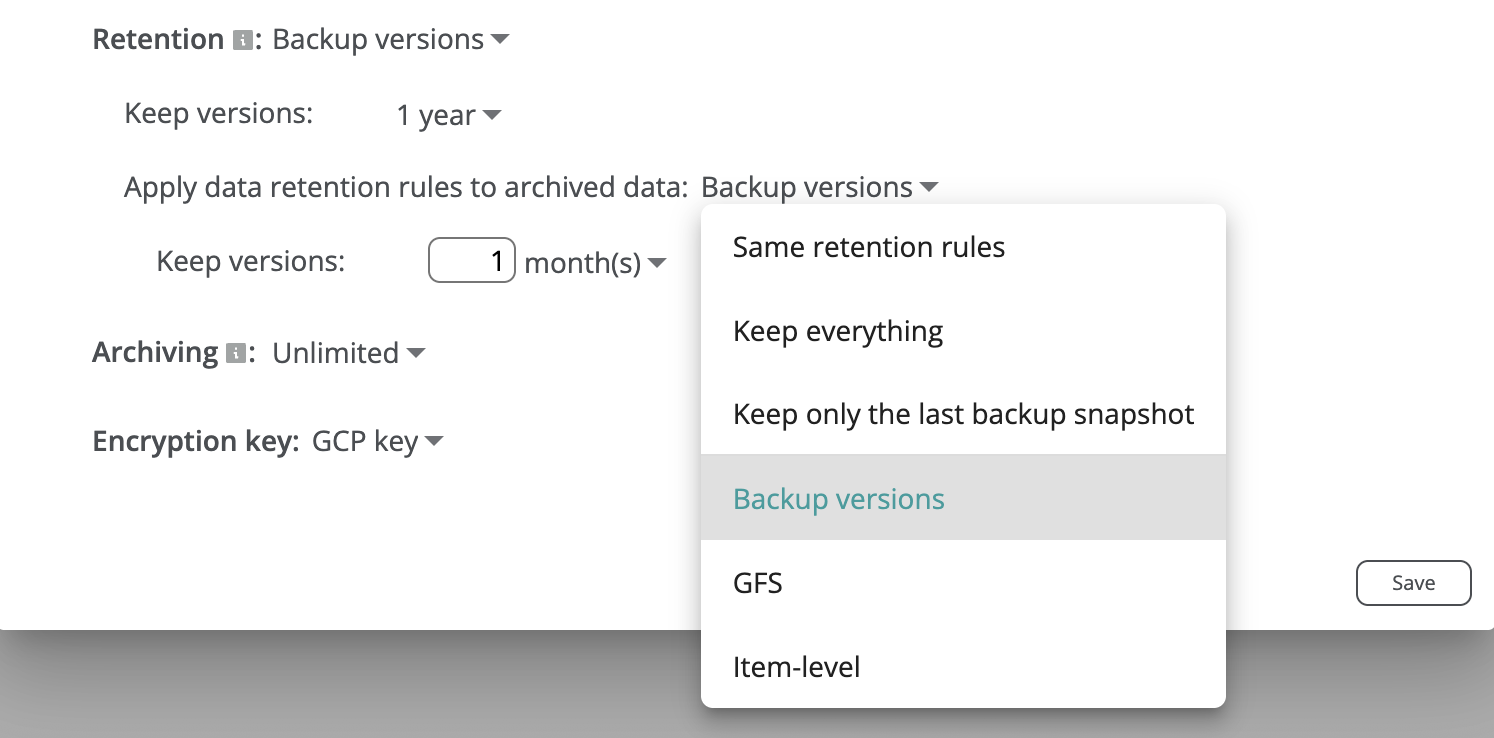
In addition to archiving rules, you can choose whether the system should apply the same or different retention rules for active and archived backups by selecting one of the options in the Apply data retention rules to archived data dropdown (by default, the same retention rules apply to active and archived resources):
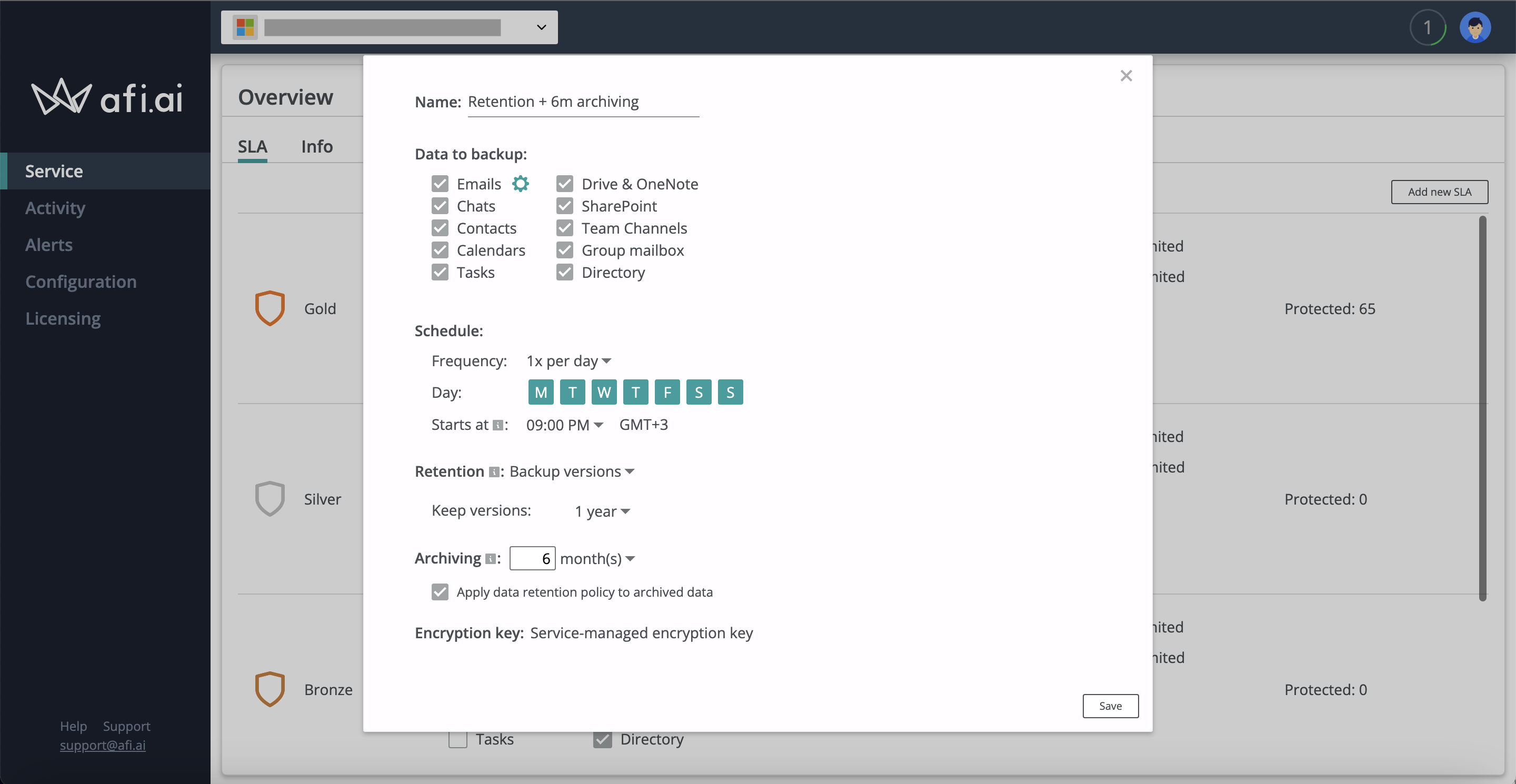
The example below shows a backup SLA policy with a one-year backup version retention rule (backup snapshots older than one year are deleted) applied to both active and archived resources protected by the policy, and a six-month archiving rule applied to archived resources.
When archiving rules are applied
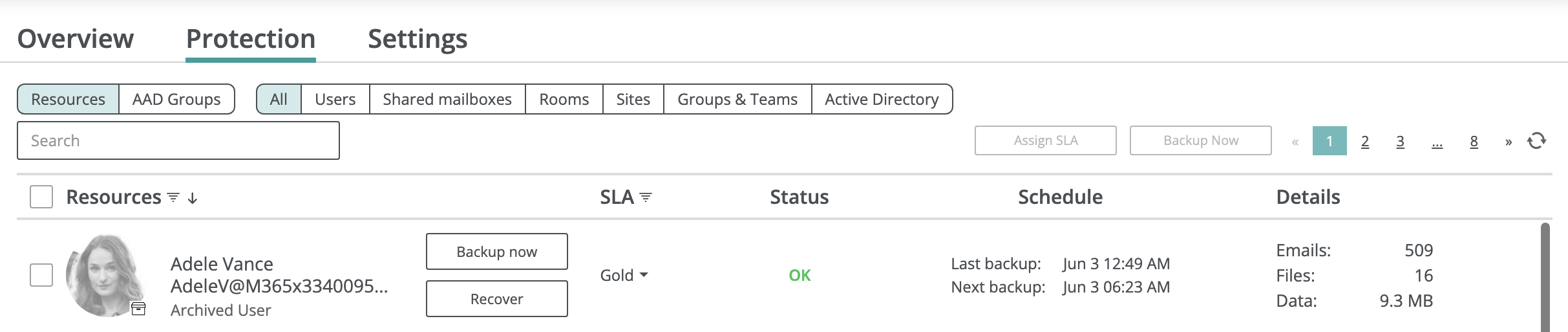
Archiving rules apply to backups that belong to deleted or inactive resources (users, drives, sites, etc.). If such an inactive resource is protected by a backup SLA, the system still runs scheduled backup jobs, but they skip backing up data (because there is no new data to back up) and perform only retention cleanup. Archived (inactive) resources are grayed out in the user interface and labeled accordingly.
A resource is marked as archived by Afi under the following conditions:
- The resource (user, drive, site, virtual machine, etc.) is deleted on the data provider side (Google Workspace, Microsoft 365, etc.).
- A Google Workspace user is suspended or archived.
- A Google Workspace Shared drive is orphaned
- A Microsoft 365 user does not have an active Microsoft 365 license for both Exchange and OneDrive.